

When Probate Stops the Build
A Florida Contractor’s Cautionary Tale
Wayne Wetherspoon didn’t just build houses in Orlando, he built trust. His company, Weatherspoon Construction LLC, carried his name, his Florida State Certified general contractor’s license, and his personal reputation into every subdivision. When clients signed contracts between $850,000 and $1 million, they believed in Wayne as much as the plans.
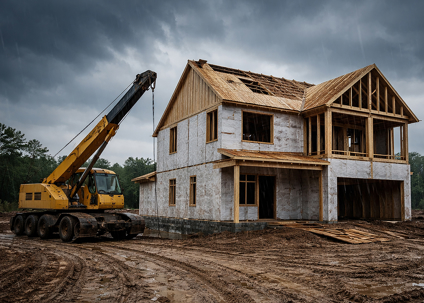
At the time of his sudden passing, four custom homes were underway, one 75% complete, one 60% complete, one 33% complete, one newly permitted. Then construction slowed, not because of weather or financing, but because of Probate.
Wayne’s License Was the Business
Wayne owned the company outright. He was the sole Florida-licensed qualifier. There were no partners, no succession documents, no trust holding the business interest, and no backup qualifier prepared to step in.
In Florida, the licensed qualifier is not symbolic. The licensed qualifier is the legal authority that allows the company to pull permits, authorize inspections, and contract lawfully. When Wayne passed, that authority paused.
Subcontractors began calling. Inspectors needed approvals. Lenders required authorization. Homeowners wanted reassurance.
But there was no one legally positioned to provide it. Probate became mandatory.
Probate Moves Slower Than Construction
Because Wayne personally owned the company, his ownership interest became part of his probate estate. Before anyone could formally control bank accounts, or make binding decisions, the court had to appoint a personal representative.
That process takes time.
Meanwhile:
- Subcontractors expected payment.
- Suppliers reviewed outstanding balances.
- Lenders reassessed exposure.
- Buyers watched construction loan interest accrue.
The 75% completed home sat near the finish line, yet final inspections slowed. The 60% and 33% completed homes grew even more vulnerable as crews shifted to more stable jobs. Suppliers tightened credit. The newly permitted home became an immediate risk. Construction timelines do not pause for probate.
The Family’s Position
Wayne’s wife managed the books and understood the financial flow. His sons and brother knew scheduling, field supervision, and client communication. They were capable operators. But they did not hold Wayne’s license.
They faced grief and legal limitation simultaneously. They could coordinate crews, but they could not immediately restore statutory authority. Banks, municipalities, and insurers operate on legal standing, not familiarity.
At the same time, household bills continued. Payroll obligations remained. Insurance premiums did not stop. Probate does not suspend economic reality.
The Ripple Effect
Home Buyers: They faced delays, interest costs, and uncertainty about completion. Some risked losing rate locks or renegotiating terms.
Subcontractors: Small trades rely on consistent cash flow. Payment uncertainty forces them to move to more stable projects.
Suppliers: Outstanding invoices may become probate claims.
Lenders: Banks prefer continuity and licensed oversight. Uncertainty reduces confidence.
Employees: Key personnel may leave rather than wait through legal delays.
On paper, the company held millions in contracted revenue. In practice, much of its value was inseparable from Wayne, his relationships, reputation, and license.
The Likely Outcome
In cases structured this way, the ending is rarely seamless. The probate court may appoint Wayne’s spouse as personal representative. The family may attempt to secure a new licensed qualifier. That process requires vetting, regulatory approval, and contractual agreements, all while projects sit vulnerable.
Often, the outcome includes:
- Reassignment of projects to another licensed contractor
- Reduced profit margins due to delays
- Liquidation of equipment to satisfy obligations
- Dissolution or sale of the company
The homes may eventually be completed, but the business may not survive intact.
The Hard Lesson
Wayne built homes meant to stand for generations. Ironically, the company he built was not structured to survive his absence.
Probate does more than transfer ownership. It interrupts authority, exposes operational gaps, and reduces enterprise value at the very moment stability is most needed.
When the license holder is the business, absence without planning becomes disruption.
Sidebar: Lessons for Florida Licensed Contractors
Whether you are a Florida-licensed contractor operating under your personal qualifier status or any other type of business, consider the following safeguards:
- Separate Ownership from Authority - Transfer company ownership into a properly funded revocable trust or entity structure to avoid probate delays.
- Establish a Successor Qualifier Plan - Have a written agreement with a secondary licensed qualifier who can step in temporarily if necessary.
- Coordinate Corporate and Estate Planning - Ensure your operating agreement, buy-sell agreement provisions, and estate documents work together.
- Review Banking and Signature Authority - Confirm that someone can access payroll and operating accounts immediately upon incapacity or death.
- Protect Project Continuity - Include contractual language allowing transition procedures in the event of death or incapacity.
- Plan for Valuation - Closely held construction companies often derive value from reputation and licensing. Formal planning preserves goodwill.
Final Thought
For Florida contractors and other licensed professionals, planning for incapacity or death isn’t pessimism, it’s professional responsibility. The projects you build may last decades; your business should too. At Jackson Law P.A., we help entrepreneurs and established business owners build more than just companies, we help them build protection around everything that matters.
Without proper legal planning, an owner’s unexpected death can trigger probate delays, licensing interruptions, frozen accounts, stalled contracts, and uncertainty for family, employees, clients, and creditors. A lifetime of work can weaken overnight.
Thoughtful succession and estate planning create continuity, clarifying authority, ownership transfer, debt handling, and contract completion. Proper structure protects your family, reassures clients, safeguards operations, and preserves your legacy long after you are gone. If you do not have business succession or estate planning in place, contact Jackson Law P.A. Protect your business, your family, your employees, and your partners from the disruption of probate and the risk of unnecessary financial loss.